

Absolute Links vs. Relative Links: SEO Value and Impact
- February 2, 2025
- Local SEO, Uncategorized
The debate between absolute links and relative links continues to live on in the SEO world, especially when discussing absolute vs relative links SEO performance. The individual significance of each has been contested, but it is widely regarded that absolute links provide better SEO value on the whole than relative links.
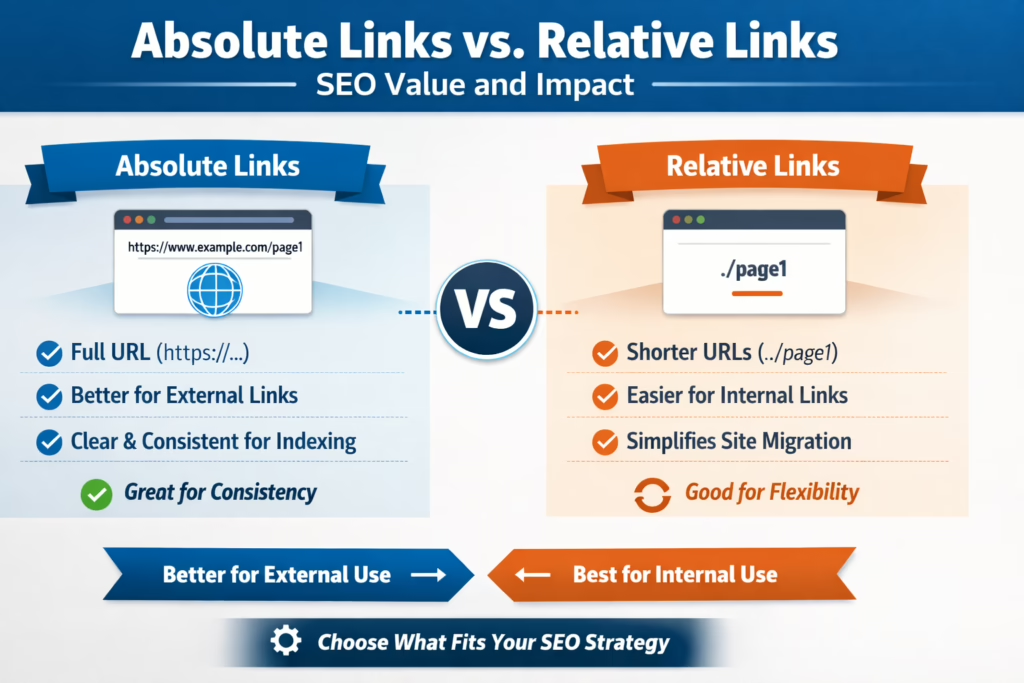
Many believe that absolute links have less potential for getting messed up when search engines index your page. It shouldn’t really make a difference, but many conclude that this is reason enough.
Furthermore, content scrapers and RSS services may ‘repurpose’ your content legitimately (or not). In either case, shouldn’t a proper back-link be attributed to your site? This situation favours absolute links. Although this is a minor argument, it’s still worth considering.
Another important factor to consider is how search engines handle links during crawling and indexing. Absolute links provide a complete URL, which makes it easier for search engines to understand the exact location of a page. This can be especially useful when dealing with larger websites or content that may be shared across multiple platforms. In terms of absolute links SEO advantages, this clarity can help avoid confusion and ensure proper indexing.
On the other hand, relative links are often preferred for internal linking within a website. They are shorter, easier to manage, and work well when migrating a site from one domain to another. Many developers favor them because they simplify site maintenance. However, when evaluating relative links SEO benefits, it is clear that they are most effective when used correctly within the same domain.
Another key consideration is consistency. Mixing both types of links without a clear strategy can sometimes create issues, especially if URLs are not properly structured. For this reason, it is important to follow best practices for internal linking absolute vs relative usage. A well-structured linking strategy not only improves navigation but also helps distribute link equity across your website.
Additionally, user experience should not be overlooked. Clean and functional links contribute to better usability, allowing visitors to move through your website without confusion. Whether you choose absolute or relative links, the goal should always be to create a seamless browsing experience while maintaining strong SEO performance.
In conclusion, both link types have their place in a well-optimized website. Absolute links are generally more reliable for external use and indexing, while relative links are efficient for internal navigation. Choosing the right approach depends on your website structure, goals, and long-term SEO strategy.
About SoDak Marketing
We’re proud to help hardworking businesses across South Dakota, Wyoming, and Nebraska grow with smart, no-nonsense digital marketing. From getting you found on Google with SEO and running ads that bring in customers, to building websites that actually work—SoDak Marketing delivers the tools you need to get results.
Request a free quote
We offer professional SEO services that help websites increase their organic search score drastically in order to compete for the highest rankings even when it comes to highly competitive keywords.
Subscribe to our newsletter!
More from our blog
See all posts







Recent Posts
- Clicks That Count: Turning Every Ad Dollar Into Real Customers September 18, 2025
- Leaves Falling, Customers Calling: 5 Marketing Tips for Black Hills September 11, 2025
- 7 AI Tools for Marketing That Help Small Businesses Grow Faster August 25, 2025